Paver Patios, Driveways & Pool Decks in Gilbert, AZ — Belgard authorized installation on an engineered base.
Arizona soil moves. Poured concrete answers that by cracking. A paver field answers it by flexing — and any single stone can be lifted and reset.
A poured slab in the Valley has two futures: it cracks, or it is already cracked and you have not looked. Interlocking pavers move with the soil instead of fighting it — and a repair is one stone, not one weekend with a saw.
Four Paver
Applications.
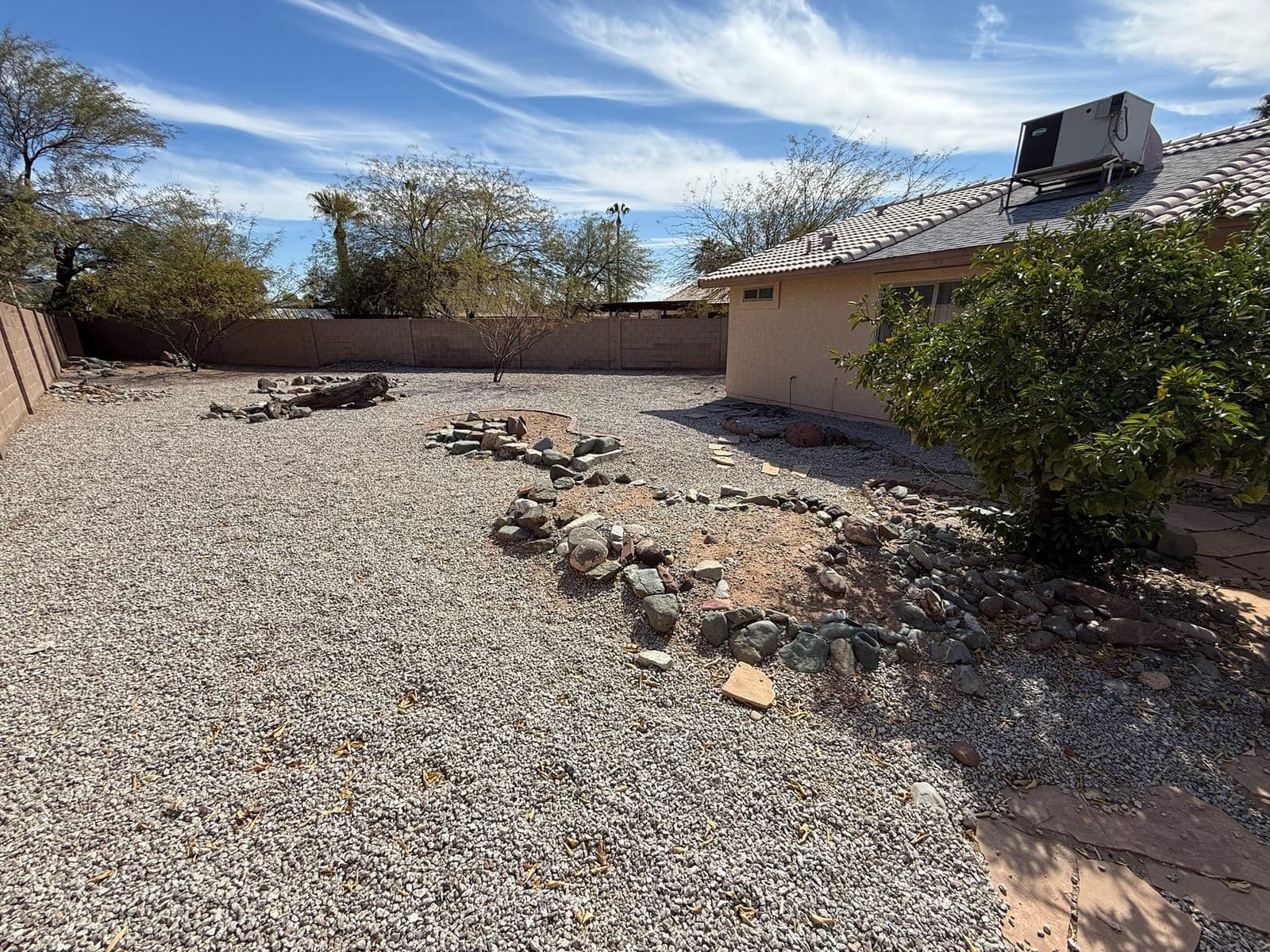
Patios & Living Space
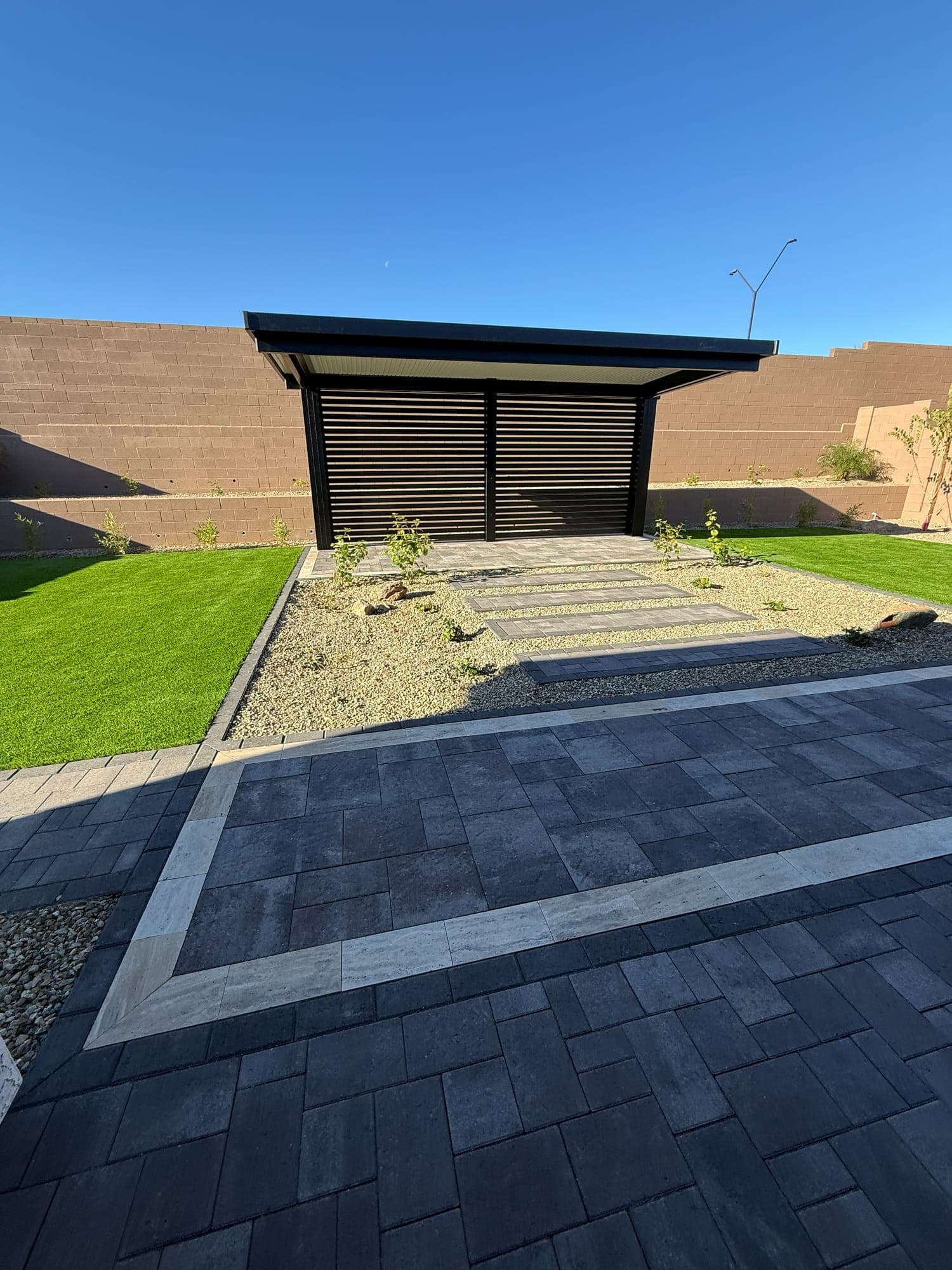
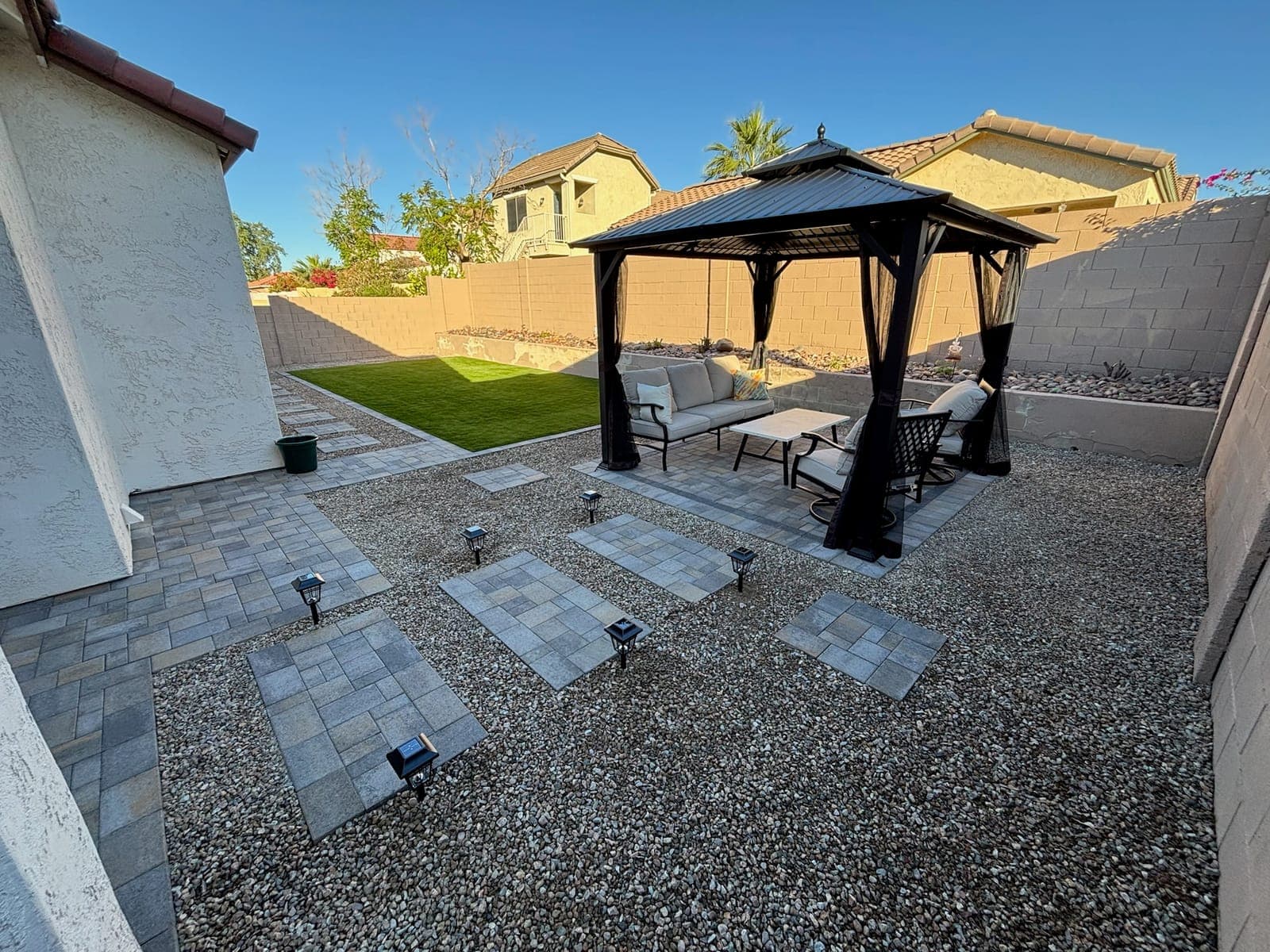
The core of most projects. We lay out the field to your sight lines from inside the house — where the pattern starts, where the border falls, how the edge meets turf or planting. A soldier course border frames the field and locks the perimeter, which is structural as well as visual: an unbordered paver field spreads at the edges and opens joints within a few seasons.
Driveways
A different animal entirely. Vehicle loads need 8–10 inches of compacted base and a thicker paver — usually 80mm rather than the 60mm used on patios. Done right, a paver driveway outlasts the concrete it replaced and never shows the spider cracking that starts at every Valley driveway's control joints.
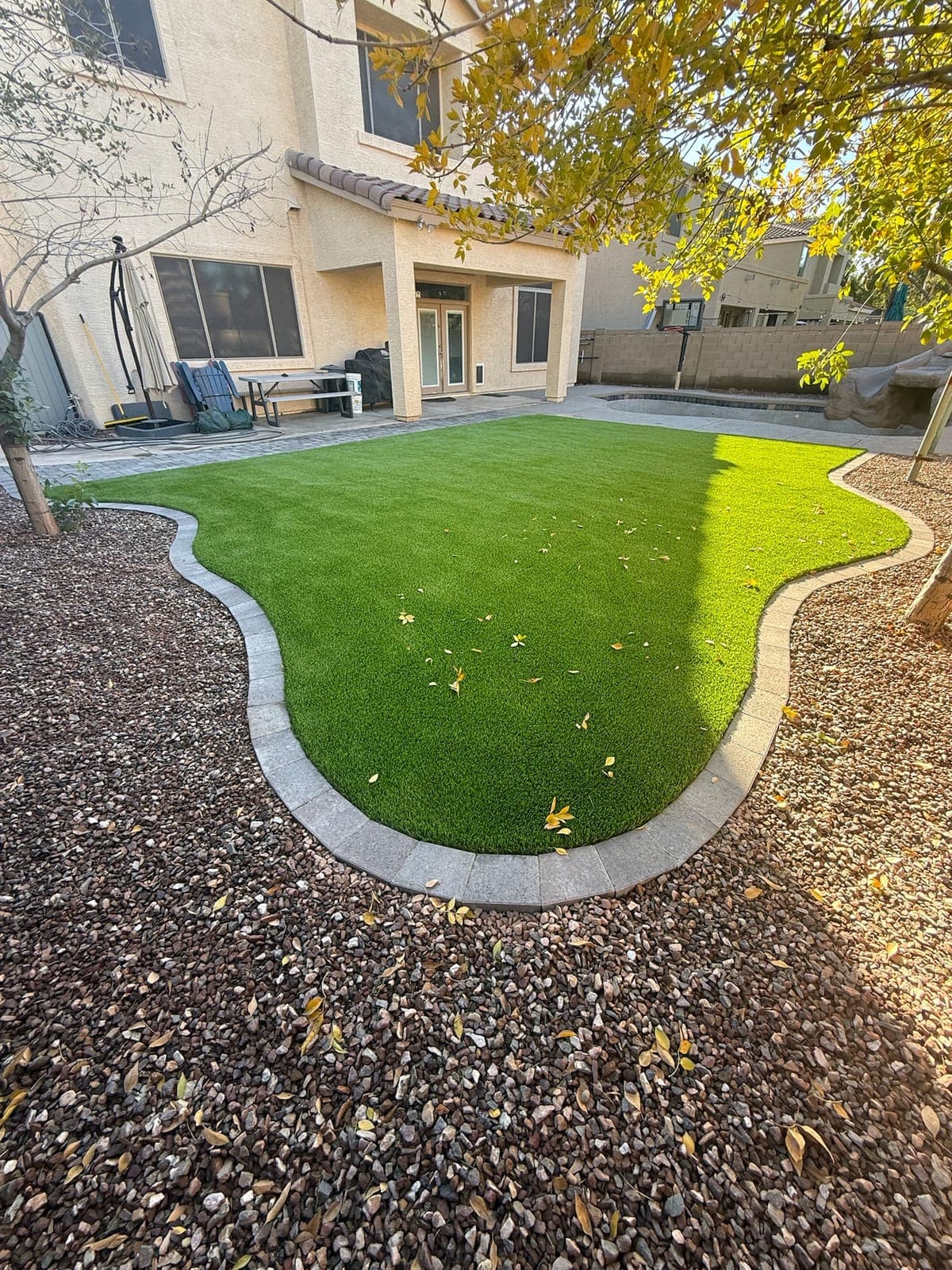
Pool Decks & Coping
Travertine is the right call around water in Arizona — it stays meaningfully cooler underfoot than concrete pavers and does not get slick when wet. We handle bullnose coping, the transition to the waterline tile, and the drainage plane so splash-out runs away from the house rather than pooling at the back door.
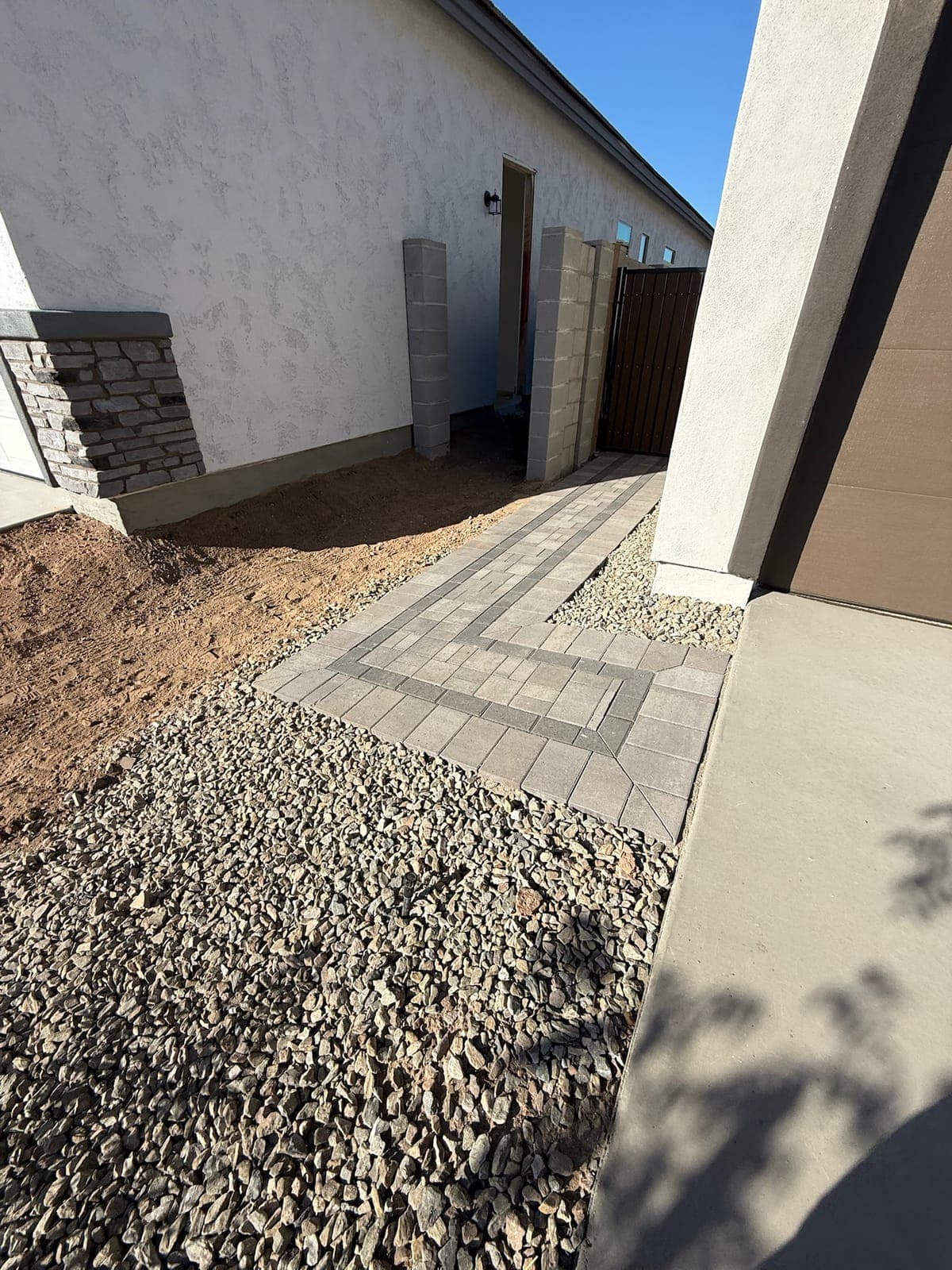
Walkways & Entries
The first hardscape anyone sees and the one most often treated as an afterthought. We widen the approach where it matters, keep the run walkable at a natural stride, and use a contrasting inlay or a change in texture to mark the entry rather than dropping a generic path down the middle of the yard.
Everything that
goes wrong,
goes wrong below.
We excavate to depth, compact the subgrade, then build 4–6 inches of aggregate base course for pedestrian areas and 8–10 for driveways, compacted in lifts. On top of that goes exactly one inch of bedding sand, screeded flat — not three inches used to hide a base that was never leveled, which is the shortcut that produces a wavy patio by year two.
Grade is not optional. Every field is pitched away from the structure so monsoon water leaves. Where the yard runs toward the house or a wall blocks the natural path, we build drainage into the design — channel drains, a dry well, or a regraded swale — before a single paver is set.
Joints are filled with polymeric sand, swept and activated so the field locks into a single interlocked plane. The edge is restrained with spikes into compacted base. Those two details are what separate a paver field that still looks laid-out in year ten from one that has crept, opened, and started growing weeds down every seam.
Craftsman
Where a field
becomes a floor.
Soldier Course Borders
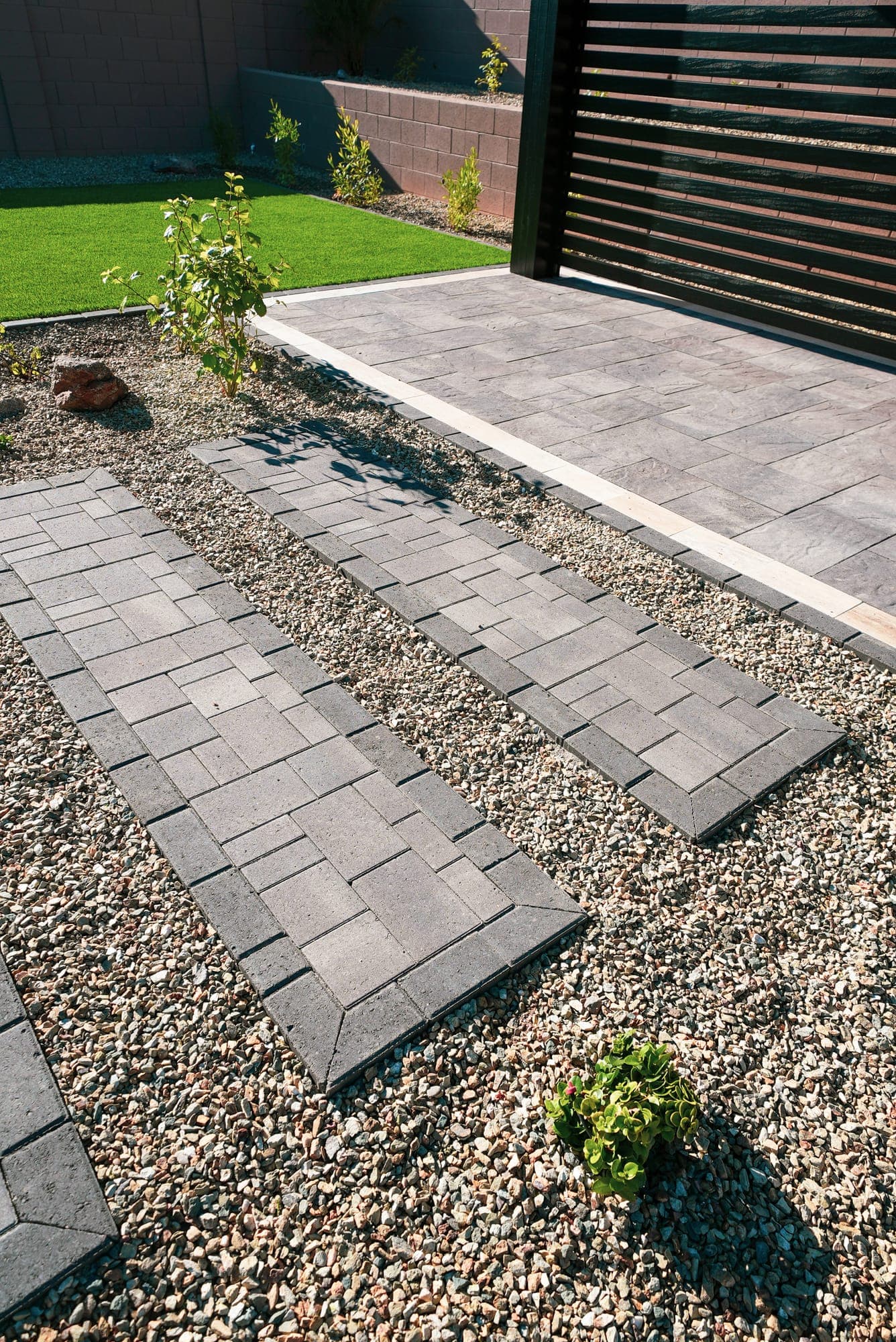
A perimeter run of stones set perpendicular to the field. It frames the space the way trim frames a room, and structurally it restrains the field edge so the interior pattern cannot creep. We run it in a contrasting tone on most projects — the visual weight is what makes a patio read as designed rather than poured.
Custom Inlays
A band or panel of contrasting paver inside the field, used to zone a large space — an outdoor rug under the dining set, a runner marking the path to the pool gate. It costs very little extra at install time and it is the single most effective way to keep a big patio from reading as an empty parking lot.
Surface Texture
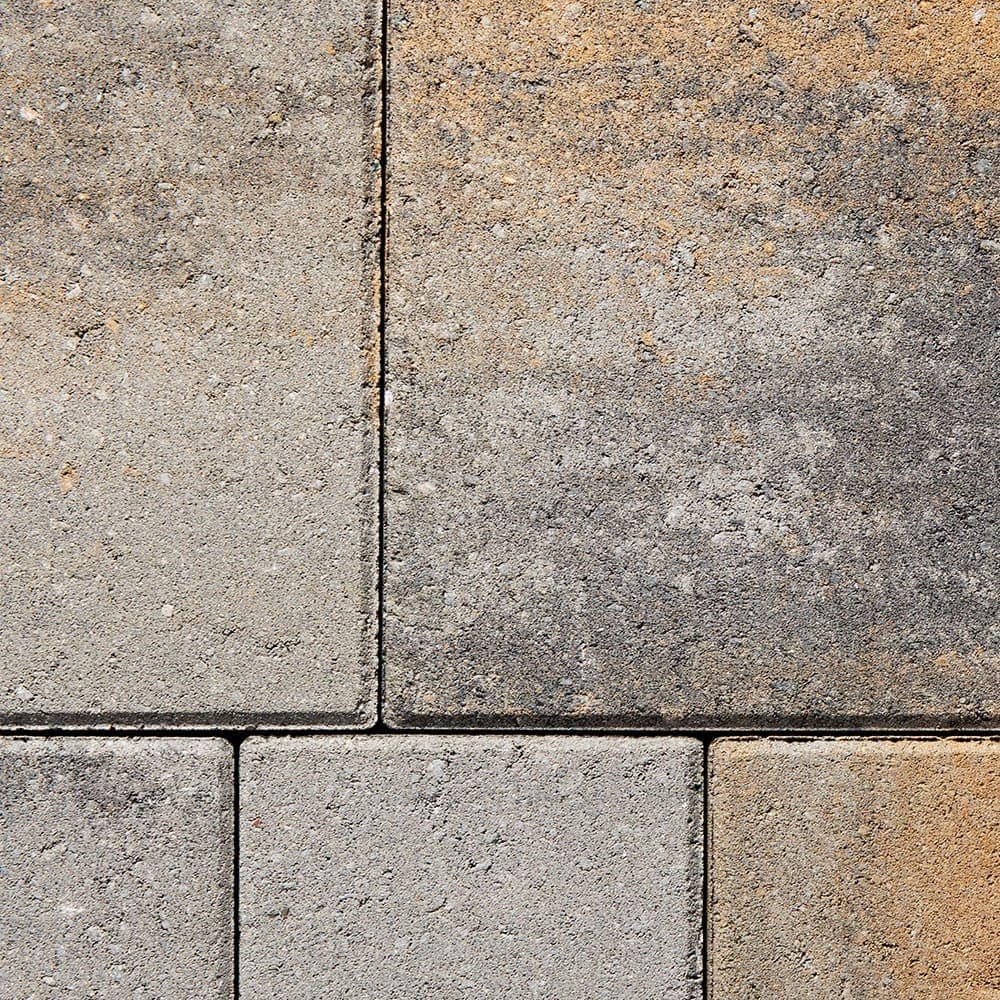
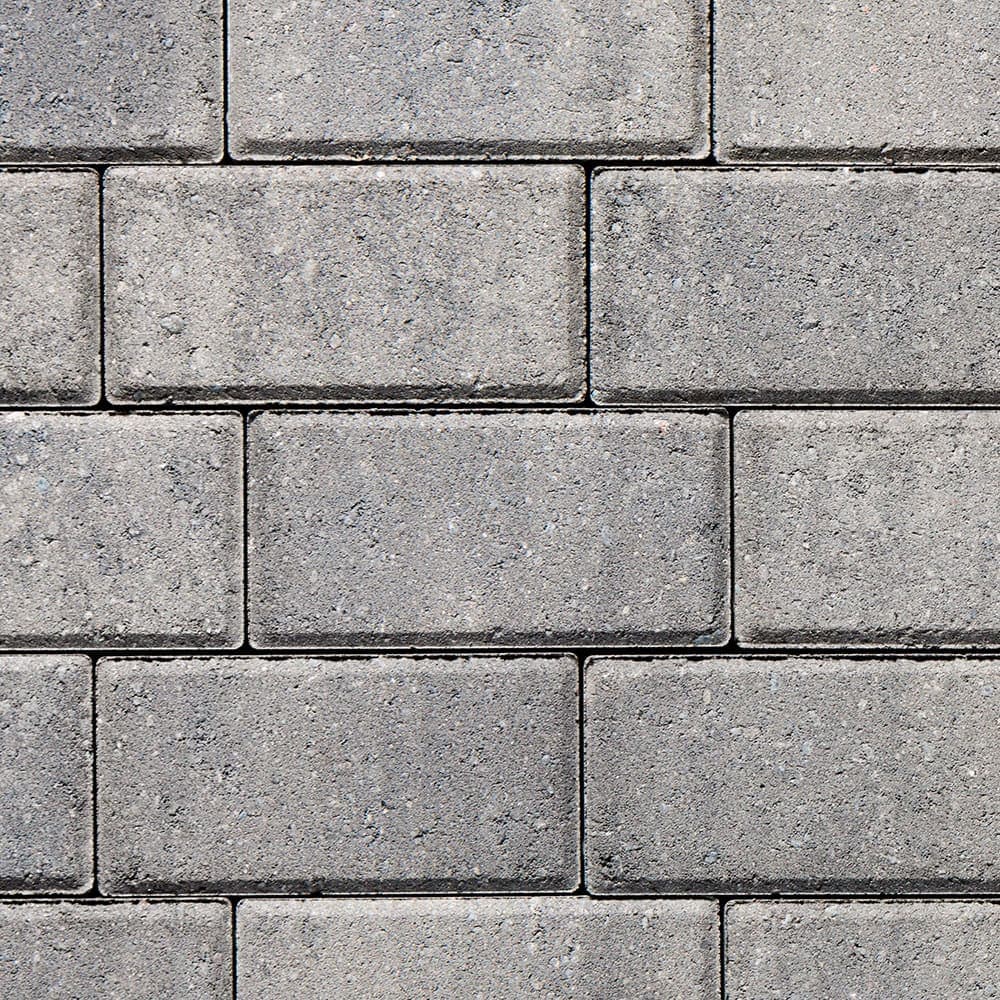
Smooth, tumbled, and slate-textured finishes read completely differently in Arizona's hard overhead light — and they perform differently underfoot when wet. We put physical samples in your yard, in your light, at the time of day you will actually use the space, before anything is ordered.
Permeable Systems
Open-graded joints and base let stormwater pass through the field into the ground instead of sheeting off it. Useful where a yard has nowhere to send monsoon runoff, where an HOA or municipality has a retention requirement, or simply where you would rather not build a drainage system you can see.
Concrete paver.
Travertine. Slab.
We install all three. Here is where each one is genuinely the right answer in Arizona — including the case where the cheap option wins.
Concrete Paver
Belgard's color runs through the full thickness, so a chip does not expose a pale core the way a dyed surface does. Best load capacity of the three, widest pattern vocabulary, and the only one we will put under a vehicle. Surface runs hot in direct sun — plan shade where bare feet go.
Travertine
Natural stone that stays noticeably cooler underfoot than concrete and holds grip when wet — which is exactly why it belongs around water. Softer than concrete paver, so we do not spec it for driveways. Needs sealing on a cycle to resist staining from citrus drop and hard water.
Poured Concrete
We are not ideologues. For a utility side yard, an AC pad, or a shed slab, poured concrete is cheaper and perfectly appropriate. What we will not do is pour a large decorative patio and pretend the control joints and eventual cracking are a design feature. For a living space, pavers win.
Pavers
FAQ.
Build a floor,
not a slab.
Free site visit, physical paver samples in your own yard and light, grade and drainage assessment, and a written quote with base work itemized separately.